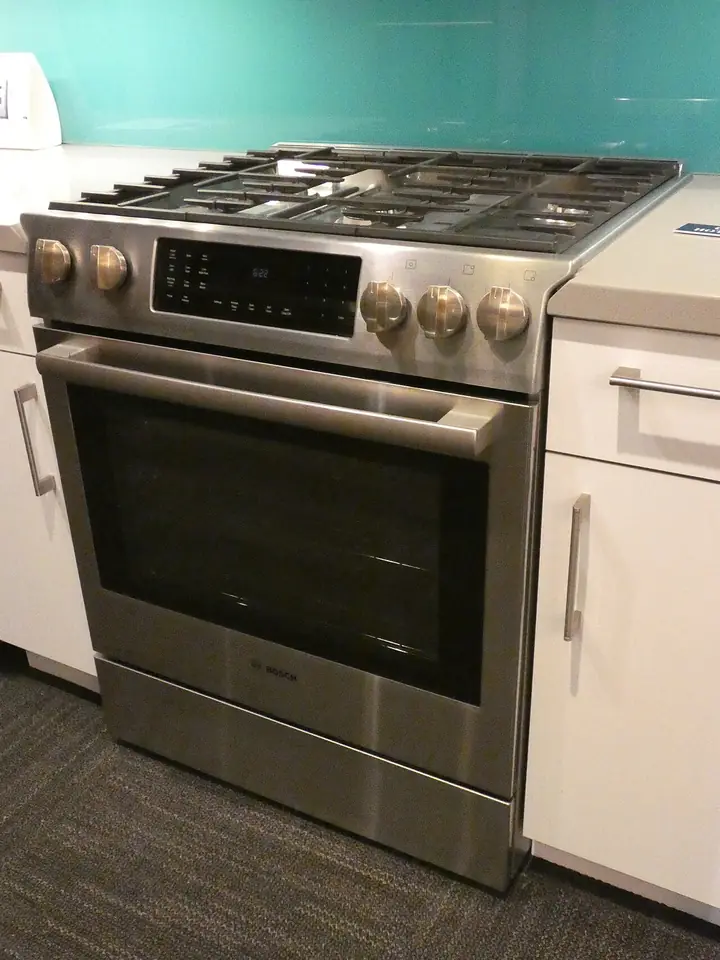
Dacor range repair, burners to steam oven
The front corners of a Dacor Contemporary dual fuel range hold 22K BTU dual burners, while the brass dual-ring burner can simmer as low as 750 BTU. We repair Dacor ranges and stoves on Oahu, cooktop and oven alike.
Dacor burner behavior, normal or not
Dacor's range manual calls several flame and spark habits normal. Five of these are in that list. The sixth is where a call starts making sense. Problems shared by every brand live on our page about a burner not working.
Clicks, then lights
The igniter sparks for about 4 seconds until the burner catches. That is the designed sequence.
Sparks again
A draft, or the range hood running on high, can make a lit burner re-spark.
Orange flame
Debris in newly installed gas lines turns the flame orange for a while. It fades with use.
Yellow tips on LP
On propane, yellow tips on the flame are expected rather than a sign of trouble.
Flame dips under grates
Smart Flame lowers the flame right under each grate support on purpose.
Clicking with no flame
Sparking that runs well past those few seconds without lighting is not in the normal list. Turn the knob off and call.
Dacor range figures
Sources: Dacor DOP36C86DLS user manual; Dacor 48-inch dual fuel steam range installation instructions; Dacor DOP48C86DLS product page
Range oven codes and the next step
| Code | What the manual says | What we suggest |
|---|---|---|
| C-23 | Meat probe sensor short | Note whether the probe was plugged in, then book a check |
| C-30 | Control board sensor or temperature | Write down when it appears and call |
| C-31 | Control board sensor or temperature | Dacor sends it straight to service |
| C-70 | Steam sensor | Skip steam modes until it is tested |
| C-72 | Drain system | Let any draining finish, then call |
| C-A2 | Cooling motor | Also a direct service call |
Does it matter which gas feeds a Dacor range?
Yes, the gas matters, because a Dacor range cooktop is set up for one kind. On natural gas the manifold runs at 5 inches water column, and on LP at 10 inches. Supply has to reach at least 6 and 11 inches. Here, homes on the pipelines get utility gas, while homes off them run propane from tanks. EIA's 2020 survey put natural gas cooking in just 11% of Hawaii homes, and 12% used propane for something. The supplied regulator stays in the line either way.