
Dishwasher won't drain? Start at the filter
Had a new garbage disposal put in lately? Its knockout plug may still be in place, and that alone stops a dishwasher draining. If not, the filter and sump come first, then the hose, then the pump, in every Honolulu kitchen.
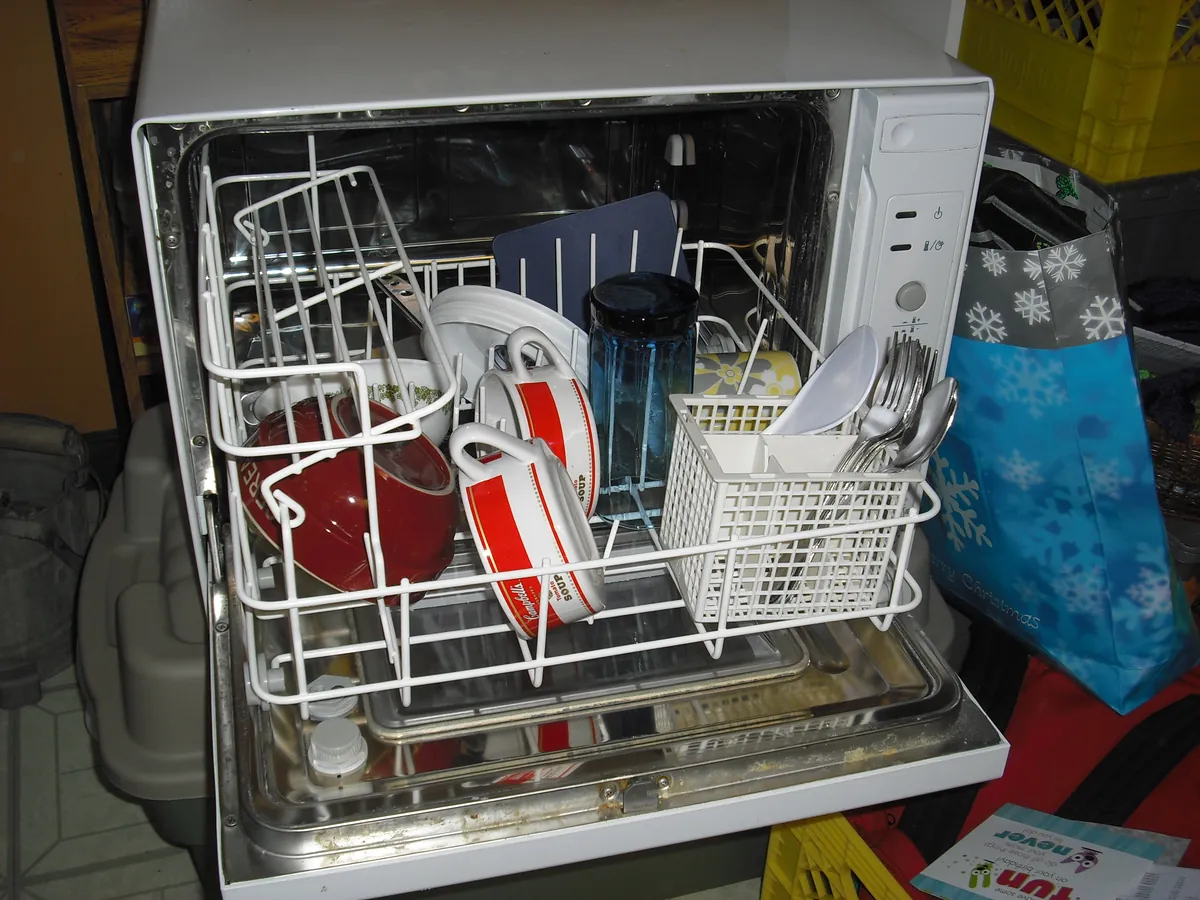
Why is my dishwasher not draining?
A clogged filter is the most common reason a dishwasher stops draining, so clean it first. Next comes food packed into the sump below it, then a drain hose that is kinked, plugged or missing its high loop, then a sink tailpiece or garbage disposal that has backed up. A newly installed disposal may still have its knockout plug in, which blocks the drain completely. After those, a jammed pump impeller; a hum with no movement gives it away. The rare causes are a timer, a drain solenoid on older designs, or the control board. If you hear no pump sound at all when the drain should run, stop there and call a technician, because the fault is electrical.
What the standing water is telling you
Before you bail anything out, look at how much water is left and listen during the drain. Whirlpool reads these clues in a set order, and so does a Honolulu technician.
A little water
Water sitting just above the filter suggests a partial restriction, most often a dirty filter or a loaded sump.
Water near the door
A tub filled up toward the door points to a severe block, or a pump that is not running at all.
Hum, no drain
A pump that hums while the water stays put usually has a stuck impeller under the pump cover.
Grinding sound
Grinding during the drain suggests broken glass in the pump. Do not reach in bare-handed.
Air gap spitting
Water spitting from the air gap by the faucet means the block is downstream, toward the disposal or tailpiece.
New disposal
Draining stopped right after a disposal went in? The knockout plug is probably still there.
Six causes, and who clears each one
| Cause | How you can tell | Owner check or technician job |
|---|---|---|
| Clogged filter | Shallow water over the filter, food film on dishes | Owner check: remove and rinse the filter |
| Debris in the sump | Labels, seeds, toothpicks or glass visible below the filter | Owner check: bail out, then pick it out carefully; Bosch has owners sponge under the pump cover |
| Hose kinked or no high loop | Problem began after an install; dirty sink water returns to the tub | Owner check: hose routing under the sink and a raised loop or clear air gap |
| Disposal or tailpiece backed up | Sink drains slowly too, or the air gap spits | Owner check: run the disposal and clean the air gap cap; a blocked sink drain is plumbing |
| Jammed pump impeller | Hum during the drain, water does not move | Owner check for debris under the cover; a pump that still will not turn is a technician job |
| Door switch, wiring or board | No pump sound at all, or codes that do not clear | Technician job |
How does a technician trace a dishwasher clog?
Read the water
On a Honolulu visit the technician notes how high the water sits and listens to a drain attempt, since level and sound split the causes early.
Filter, sump
The filter comes out and the sump and pump cover are cleared by hand, watching for glass, seeds and labels that jam the impeller.
Hose path
The drain hose, its high loop or air gap, and the connection at the disposal or tailpiece are checked under the sink.
Pump circuit
If the path is clear and the pump is silent, the door switch, wiring, pump voltage, timer and board are tested in turn.